Jan 27, 2026
How AI Automation Transforms Collections Efficiency in 2026
AI collections automation reduces operational costs by 80% while maintaining FDCPA and TCPA compliance through deterministic guardrails, automated workflows, and real-time audit trails for regulated lenders.
Collections teams face a math problem that doesn't solve itself. Call volume grows, delinquency windows shrink, and adding headcount rarely keeps pace with portfolio expansion.
AI changes the equation by automating routine outreach, predicting which accounts need attention first, and executing back-office workflows without manual intervention. This guide covers how AI transforms collections efficiency—from the specific mechanisms that drive results to the compliance controls that make adoption viable for regulated lenders.
Why AI in Debt Collection Matters for Lenders Today
AI in collections handles routine tasks like payment reminders, data entry, and follow-up scheduling through voicebots and chatbots. This frees human agents to focus on complex cases. Predictive analytics identifies high-risk accounts for early intervention, while personalized communication optimizes contact timing and channel selection. The result is lower costs, fewer errors, better borrower experiences, and higher recovery rates.
Traditional collections processes don't scale well. Manual dialing, static scripts, and limited call coverage mean most borrowers never hear from a collector until they're already deep in delinquency.
Not because collectors aren't skilled. Because there aren't enough hours to reach every borrower at the right time.
Regulatory pressure adds another layer. The CFPB, state examiners, and federal banking agencies expect consistent treatment, documented interactions, and auditable decision-making. AI offers a path to meet all of this while expanding coverage—but only when compliance is built into the foundation.
How AI Transforms Collections Efficiency
The efficiency gains from AI in collections come from specific mechanisms. Understanding how AI actually works helps teams evaluate what's realistic versus what's marketing.
Automating Repetitive Collection Tasks
AI handles the back-office work that consumes collector time: sending payment reminders, scheduling follow-ups, tracking promises, and updating loan systems. This goes beyond answering borrower questions—it's about executing workflows from intake through resolution.
When a borrower makes a promise to pay, AI can log the commitment, schedule the follow-up, and trigger outreach if payment doesn't arrive. No manual tracking required.
Personalizing Borrower Communication at Scale
AI tailors outreach timing, channel, and tone based on borrower history. Instead of one-size-fits-all scripts, each interaction reflects what the AI knows about that specific borrower.
Borrower-level memory means the AI remembers prior calls, promises, hardship notes, and disputes. A borrower who mentioned job loss last month doesn't have to explain it again.
Reducing Manual Workload for Collection Teams
With AI handling routine outreach, collectors focus on complex cases—hardship negotiations, disputes, escalations. The math changes: more accounts covered, fewer manual touches per resolution.
Key Benefits of AI-Powered Collections
The operational benefits of AI in collections translate directly to measurable outcomes.
Faster Recovery and Reduced Days Delinquent
Faster outreach and consistent follow-up shorten the collection cycle. Days delinquent—the average time an account remains past due—drops when borrowers receive timely, relevant communication.
AI doesn't forget to follow up. Every promise gets tracked, every missed payment triggers outreach.
Lower Operational Costs per Account
Cost reduction comes from automation: fewer agent hours per resolution, higher throughput without adding headcount.
The savings compound as AI handles more routine interactions, reserving human time for high-value conversations.
Consistent Borrower Experiences Across Channels
AI delivers the same compliant, empathetic experience whether a borrower calls, texts, or emails. Human agents vary in tone, accuracy, and adherence to scripts. AI doesn't.
Consistency matters for compliance—and for borrower satisfaction.
Improved Right-Party Contact Rates
Right-party contact means reaching the actual borrower, not a wrong number or voicemail. AI optimizes contact timing and channel selection to increase successful connections.
When AI learns that a borrower responds to texts at 6 PM but ignores morning calls, it adjusts accordingly.
How AI Ensures Compliance in Regulated Lending
Compliance isn't optional in consumer lending. It's the baseline for exam readiness and the primary concern for risk teams evaluating AI adoption.
Deterministic Guardrails and Compliance Controls
Modern collections AI combines advanced language models with deterministic guardrails—enabling natural conversation while preventing compliance violations through multiple layers of safety controls. This hybrid approach delivers both conversational flexibility and regulatory certainty.
AI enforces required disclosures—like the Mini-Miranda statement in collections—and avoids prohibited phrases through system-level controls, not just prompting. Compliance violations get blocked in real time, not discovered during quarterly audits.
State-specific requirements add complexity. AI can adapt disclosures based on borrower location without manual intervention.
Contact Frequency Caps and Time-of-Day Controls
Regulation F and state-level rules define when and how often collectors can contact borrowers. AI automatically enforces contact windows, frequency caps, and channel restrictions as system-level controls rather than policy documents collectors have to remember.
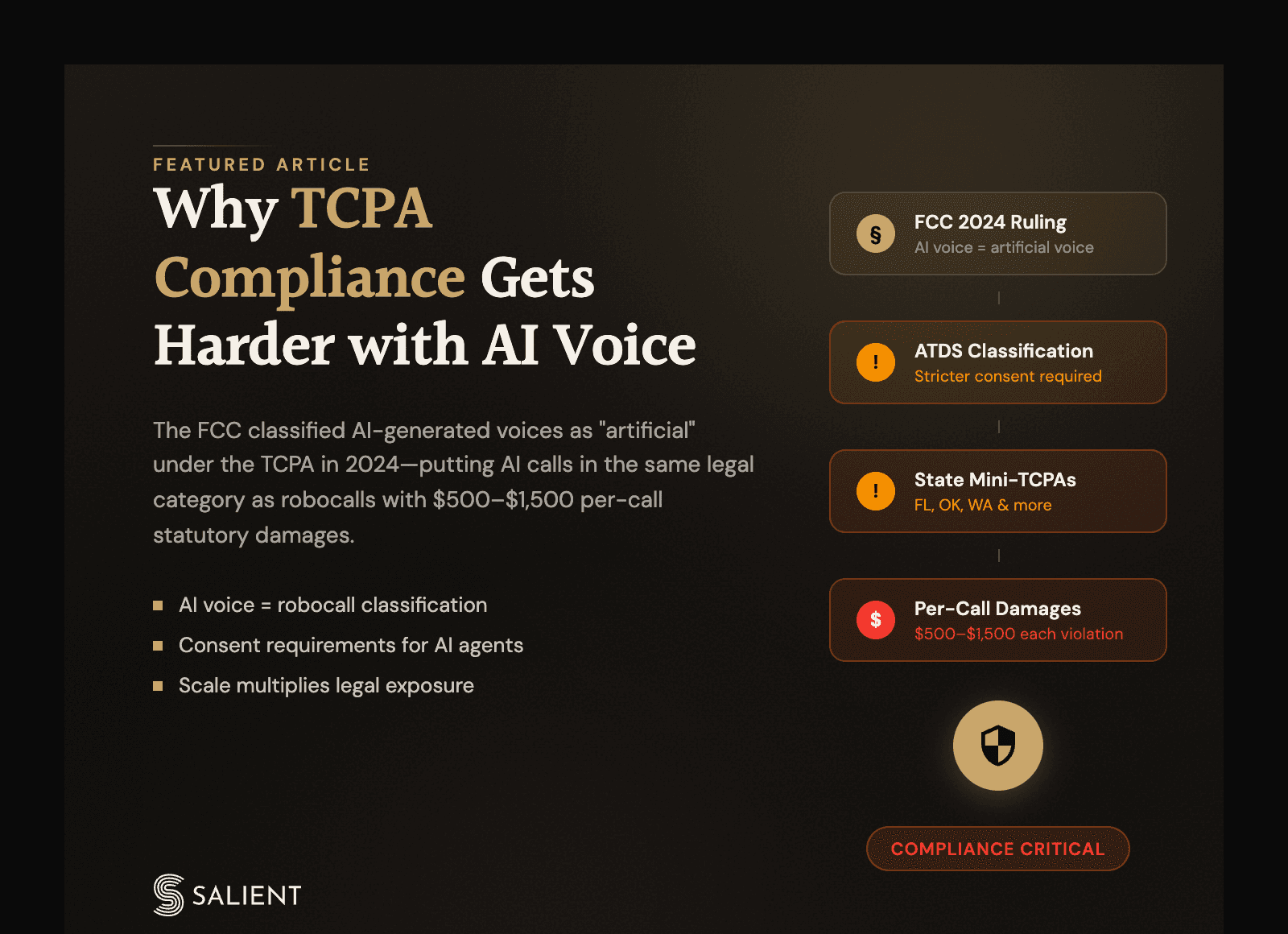
Channel-specific consent management prevents TCPA violations before they happen—the system tracks authorization status and respects borrower preferences in real time.
Audit Trails and Evidence Export for Regulators
Every interaction gets logged: what was said, what action was taken, and why. When examiners ask questions, teams can generate evidence packs with one click.
Compare this to manual call review processes, where pulling documentation for a single borrower can take hours.
AI in Collections Use Cases Across the Loan Lifecycle
AI applies across the full collections lifecycle, not just late-stage outreach.
Payment Reminders and Promise-to-Pay Follow-Ups
Automated outreach before and after due dates keeps borrowers informed. When a borrower makes a promise, AI tracks it and follows up if payment doesn't arrive.
Hardship and Extension Conversations
AI handles sensitive conversations with empathy—gathering information and presenting a menu of available options within predefined parameters. Rather than recommending a specific plan, AI explains the terms, disclosures, and implications of each option, allowing borrowers to make informed decisions.
When situations require human judgment or when a borrower requests to speak with someone, AI escalates with full context.
Dispute Intake and Resolution
AI manages dispute workflows end-to-end:
Intake: Captures dispute details and categorizes the issue
Documentation: Gathers supporting information from borrower and internal systems
System updates: Records status changes and resolution steps
Tracking: Monitors timelines and triggers follow-up actions
This isn't just answering questions—it's executing the process.
Outbound Collections Across Delinquency Stages
AI handles collections conversations across the entire delinquency lifecycle—from early payment reminders through late-stage recovery—with appropriate tone and urgency for each stage.
Integrating Collection AI with Existing Loan Systems
Implementation concerns often stall AI adoption. Teams want to know: will this work with what we already have?
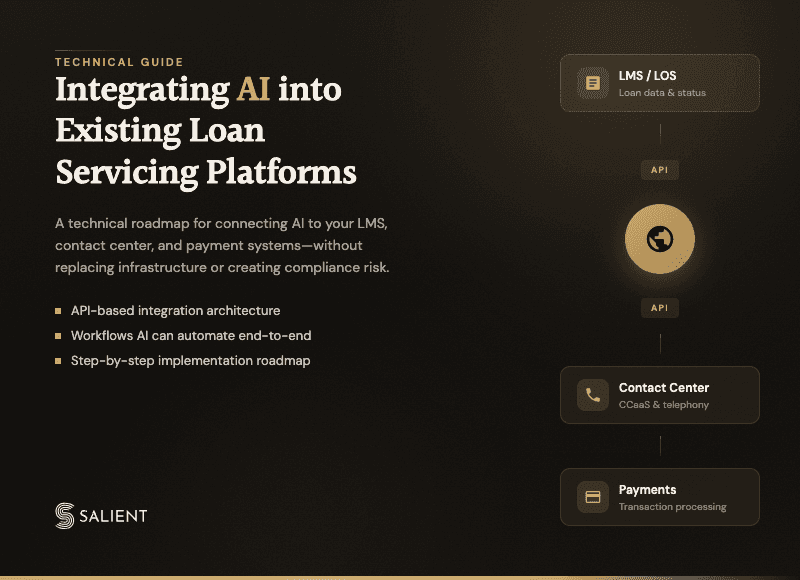
Connecting to LMS and Servicing Platforms
AI reads borrower data from loan management systems and writes outcomes back. Integration approaches vary based on system architecture—some implementations achieve real-time API synchronization, while others use scheduled file exchanges for legacy systems without open APIs.
The last-mile reality: Writing data back to legacy loan management systems requires careful planning. Teams should understand whether their pilot will support true real-time synchronization or batch updates at day's end—both can work, but operational workflows differ.
Working with Contact Center Infrastructure
Integration with CCaaS platforms enables call routing, warm transfers, and agent handoffs. AI fits into existing workflows rather than replacing them.
Syncing with Payment Providers
AI can take payments, set up plans, and confirm transactions through existing payment rails. Real-time sync ensures accurate account status across systems.
How to Measure AI for Collections Success
Measuring AI performance requires the right metrics.
Metric | What It Measures | Why AI Improves It |
Recovery rate | Dollars collected vs. dollars owed | Faster, more consistent outreach |
Promise-to-pay conversion | Promises kept vs. promises made | Automated follow-up and reminders |
Cost per collection | Total cost divided by accounts resolved | Reduced manual labor per account |
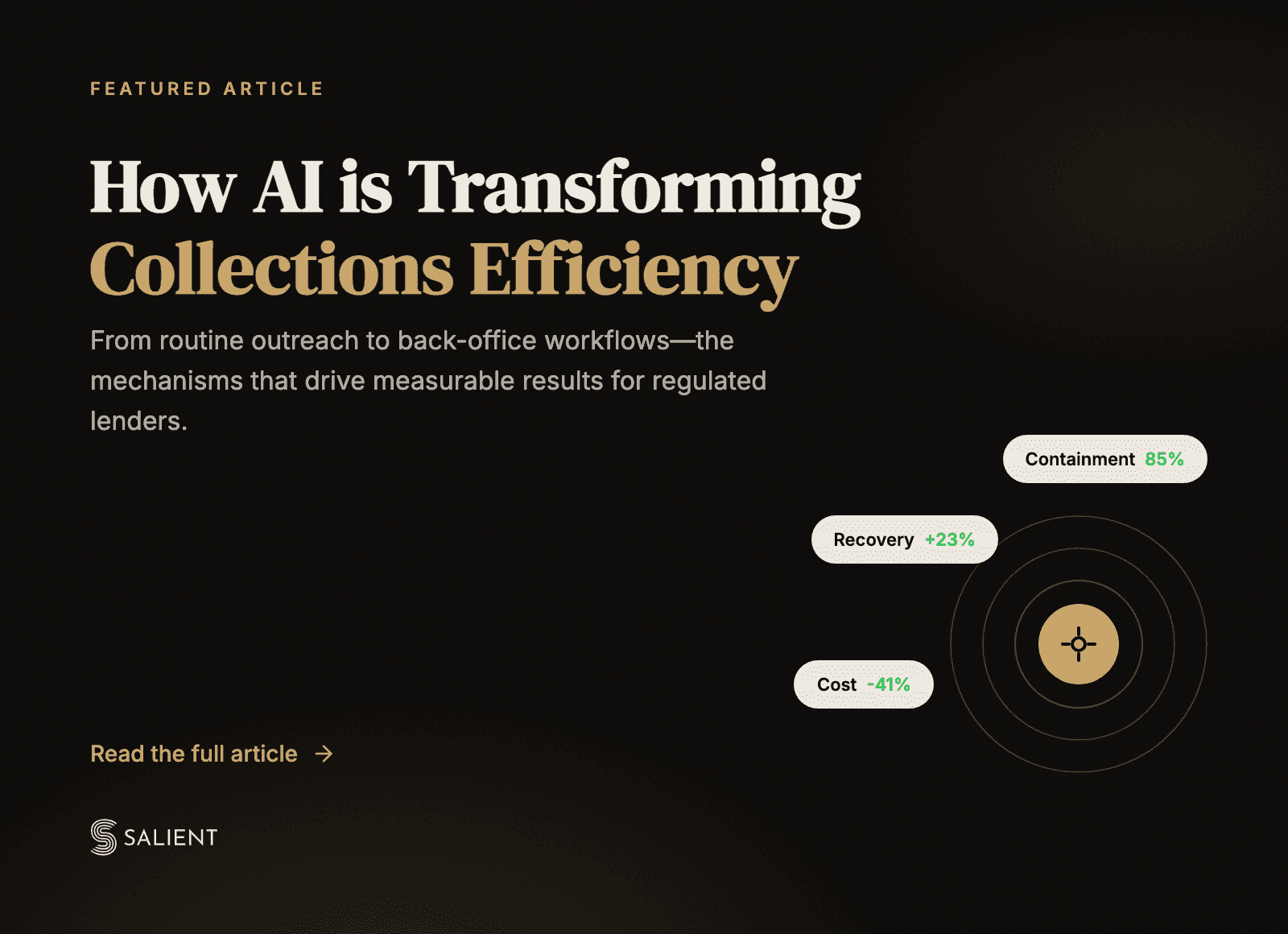
Containment rate | Issues resolved without human escalation | AI handles routine cases end-to-end |
Recovery Rate and Promise-to-Pay Conversion
Recovery rate measures dollars collected against dollars owed. Promise-to-pay conversion tracks how many commitments actually result in payment. AI's consistency and follow-through improve both.
Cost per Collection and Handle Time
Cost per collection drops as AI handles more routine interactions. Average handle time decreases when AI automates research and system updates before human agents engage.
Containment Rate and Escalation Volume
Containment rate measures issues resolved by AI without human intervention. Higher containment means human agents focus on exceptions rather than routine requests.
What Makes Agentic AI Different from Basic Automation
The term "agentic AI" describes AI that takes actions, not just provides answers. This distinction matters for collections.
Rule-based automation: Follows static decision trees, cannot adapt to unexpected situations
Chatbots and IVRs: Answer questions but don't execute tasks or update systems
Agentic AI: Understands context, takes action within guardrails, learns from outcomes
Basic automation follows scripts. Agentic AI makes decisions—adjusting a due date, submitting a payment, routing a dispute—within defined parameters.
The difference shows up in outcomes: agentic AI can handle a conversation from start to finish, including the back-office work that follows.
Building a Compliance-First AI Collections Strategy
For teams evaluating AI in collections, the path forward typically starts with a focused pilot rather than a full deployment.
Start with one portfolio and one use case to limit variables and measure clearly
Define guardrails and escalation rules upfront so compliance teams have visibility
Measure outcomes weekly to identify issues early
Involve compliance and operations from day one rather than seeking approval after the fact
Design something you'd be comfortable showing to regulators as the baseline standard
Platforms built specifically for regulated lending—with pre-built compliance controls, audit trails, evidence export, and deterministic guardrails—reduce the risk of pilots that create exam headaches. Salient was purpose-built for this: compliance-first architecture designed by former compliance officers and bank examiners who understand what regulatory scrutiny actually looks like.
The goal isn't just efficiency. It's efficiency that holds up under supervision.
Why Compliance-First Architecture Matters
Not all AI collections platforms are built the same. Generic conversational AI adapted for collections often lacks the regulatory controls that matter during exams.
Salient's platform was designed from the ground up for regulated consumer lending:
Deterministic guardrails that prevent compliance violations before they happen
Disclosure delivery trained on regulatory requirements with the ability to adjust by borrower location and loan type
Complete audit trails designed for regulatory review with comprehensive evidence export
Borrower-level memory that maintains context across every interaction
Seamless escalation to human agents with full conversation history
When your collections AI can demonstrate compliance by design—not retrofitted compliance controls—risk officers say yes faster.
FAQs about AI in Collections
How does AI handle sensitive hardship conversations with borrowers?
AI uses empathetic scripting and borrower-level memory to acknowledge circumstances and present a menu of available options like extensions or payment plans with full disclosures. Rather than recommending a specific solution, AI explains the terms and implications of each option so borrowers can make informed decisions. AI escalates to human agents when situations require judgment beyond its guardrails or when borrowers request to speak with someone.
Can AI collections agents communicate across voice, SMS, and email simultaneously?
Yes—AI agents can engage borrowers across multiple channels while maintaining shared context, so a borrower who starts on SMS and calls back later doesn't have to repeat themselves. The system tracks channel-specific consent to ensure compliance with TCPA requirements.
What happens when an AI collections agent encounters a situation it cannot resolve?
The AI follows predefined escalation rules to route the borrower to a human agent, passing along full conversation context and borrower history so the handoff is seamless.
How long does a typical AI collections pilot take to implement?
Most teams can launch a focused pilot—one portfolio, one use case, defined guardrails—within weeks rather than months. Implementation timelines vary based on integration requirements, but platforms designed for rapid deployment can accelerate time-to-value significantly.
Does an AI collections agent remember previous interactions with the same borrower?
Yes—AI agents use borrower-level memory to recall prior calls, promises, hardship notes, and disputes, so every conversation is informed by the borrower's full history.
How can lenders explain AI collections decisions to regulators during an exam?
Compliant AI platforms log every interaction with what was said, what action was taken, and why, enabling teams to generate evidence packs that document decision rationale for federal and state examiners. Salient's platform includes built-in exam readiness features that let compliance teams pull documentation instantly rather than spending days reconstructing borrower timelines.
What makes Salient different from other AI collections platforms?
Salient was purpose-built for regulated consumer lending by former compliance officers and bank examiners. The platform combines advanced language models with deterministic guardrails to deliver natural conversations while preventing compliance violations through multiple layers of safety controls. Over 20% of US auto lenders trust Salient to automate collections while maintaining exam readiness.